
Should you say “at the weekend” or “on the weekend”? If you have ever stopped while writing a sentence and wondered which preposition is correct, you are not alone.
This is a very common question for English learners because both expressions are correct, but they are used differently depending on the variety of English.
The main difference is simple: British English usually uses “at the weekend,” while American English usually uses “on the weekend.”
The meaning is basically the same. Cambridge Dictionary and Oxford Learner’s Dictionaries both identify this as a difference between British and North American usage.
For example:
- British English: I’m going to visit my family at the weekend.
- American English: I’m going to visit my family on the weekend.
Neither sentence is wrong. The speaker simply follows a different regional pattern.
This small difference matters because learners often try to apply one general rule to every time expression. English prepositions do not always work that way.
We say on Monday, at night, in July, and then at the weekend in British English or on the weekend in American English.
By the end of this guide, you will know when to use each expression, why the prepositions are different, which form is more natural in British and American English, what mistakes to avoid, and how to choose the right form quickly when speaking or writing.
What Does “At” Mean?
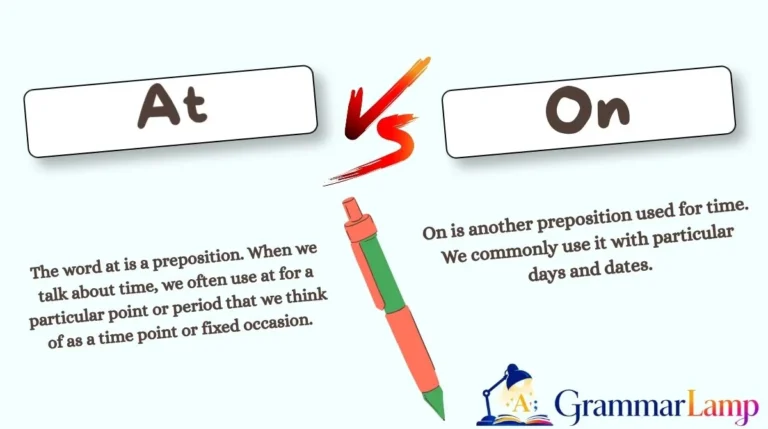
The word at is a preposition. When we talk about time, we often use at for a particular point or period that we think of as a time point or fixed occasion.
For example:
- The meeting starts at 9:00.
- I usually wake up at night.
- She called me at lunchtime.
- What are you doing at the weekend?
In British English, at the weekend is the normal expression for talking about Saturday and Sunday, or the general weekend period. Cambridge Dictionary specifically gives “at the weekend” as the British English form and notes that American English generally uses “on the weekend.”
When should you use “at the weekend”?
Use at the weekend when you are following British English usage and you mean the weekend as a general time.
For example:
- I usually relax at the weekend.
- What are you doing at the weekend?
- We are going to the beach at the weekend.
- She visits her grandparents at the weekend.
- I have a lot of homework at the weekend.
- The shops are very busy at the weekend.
- He usually plays football at the weekend.
- We are meeting some friends at the weekend.
These sentences are natural in British English.
The important point is that at is not being used because “weekend” is a single exact moment. English simply has a conventional expression, at the weekend, in British usage.
Cambridge’s grammar guidance explains that at can be used with particular points in the week and gives “What are you doing at the weekend?” as an example.
A common learner confusion
Some learners think that at must always refer to a very short moment, such as at 5 o’clock. That is not true.
Compare:
- at 5 o’clock
- at night
- at Christmas
- at the weekend
The time periods are different in length, but English uses at in each expression.
So, if you are writing British English, do not worry that at the weekend looks unusual. It is a standard and natural expression.
What Does “On” Mean?
On is another preposition used for time. We commonly use it with particular days and dates.
For example:
- I’ll see you on Monday.
- She arrived on Friday.
- We met on July 10.
- He called me on his birthday.
In American English, on is also the normal preposition used with the weekend.
Therefore:
American English: I’m going to the cinema on the weekend.
The expression means that the activity will happen during the weekend. It does not mean that the activity happens on top of the weekend or on a particular single day.
When should you use “on the weekend”?
Use on the weekend when you are following American English usage.
Here are some natural examples:
- I usually sleep late on the weekend.
- What are you doing on the weekend?
- We are going shopping on the weekend.
- She visits her parents on the weekend.
- I have more free time on the weekend.
- They went hiking on the weekend.
- He works on the weekend sometimes.
- Are you free on the weekend?
Cambridge Dictionary lists “on the weekend” as the American English equivalent of British “at the weekend.”
What about “on weekends”?
American English also commonly uses the plural form:
I play tennis on weekends.
This usually means the activity happens regularly.
Compare:
- I played tennis on the weekend. → one particular weekend
- I play tennis on weekends. → a regular habit
British English commonly uses at weekends for the same habitual meaning:
- I play tennis at weekends.
Oxford Learner’s Dictionaries lists at the weekend as British English and on the weekend as especially North American English. It also gives at weekends and on a weekend among common weekend expressions.
Difference Between “At the Weekend” and “On the Weekend”
The biggest difference is regional usage, not meaning.
If you use British English, at the weekend is usually the natural choice.
If you use American English, on the weekend is usually the natural choice.
Comparison table
| Expression | Main variety | Meaning | Example |
|---|---|---|---|
| at the weekend | British English | during the weekend | I’ll call you at the weekend. |
| on the weekend | American English | during the weekend | I’ll call you on the weekend. |
| at weekends | British English | regularly on weekends | We play cricket at weekends. |
| on weekends | American English | regularly on weekends | We play baseball on weekends. |
| this weekend | Both | the coming/current weekend | I’m busy this weekend. |
| last weekend | Both | the previous weekend | We stayed home last weekend. |
| next weekend | Both | the following weekend | We’re traveling next weekend. |
| over the weekend | Both | during the weekend period | I finished the project over the weekend. |
Usage difference
Consider these two sentences:
British English:
I’m going to visit my uncle at the weekend.
American English:
I’m going to visit my uncle on the weekend.
The meaning is essentially identical.
The difference is similar to many other British-American vocabulary and grammar differences. English has developed different patterns in different regions, and prepositions are part of that variation.
Grammar logic
English learners sometimes ask, “Why is at correct in Britain but on correct in America?”
There is no useful rule that lets you calculate the answer from the physical meaning of the prepositions. This is mainly a matter of established usage.
Cambridge explains that British English uses at with weekends, while American English usually says on the weekend.
So it is better to learn the expression as a complete phrase:
British English → at the weekend
American English → on the weekend
Trying to translate the preposition word by word can make the choice more confusing.
Sentence structure
Both expressions normally follow the same basic structure:
Subject + verb + at/on the weekend
Examples:
- I work at the weekend.
- I work on the weekend.
- She visits us at the weekend.
- She visits us on the weekend.
Only the preposition changes.
The verb, subject, and meaning can stay exactly the same.
Grammar Rules You Must Remember
Rule 1: Use “at the weekend” in British English
If your English follows British usage, at the weekend is the standard choice.
Example:
We are going to London at the weekend.
British English learning materials commonly use this form. The British Council also teaches at the weekend and at weekends as standard time expressions. (Learn English)
Rule 2: Use “on the weekend” in American English
In American English, on the weekend is the usual form.
Example:
We are going to Chicago on the weekend.
The same idea in British English would normally be:
We are going to London at the weekend.
Again, neither form changes the basic meaning.
Rule 3: Use the plural for regular habits
When you talk about something that happens regularly, you can use a plural form.
British English:
I usually go cycling at weekends.
American English:
I usually go cycling on weekends.
The plural tells us that this is a repeated activity, not one particular weekend.
Cambridge Dictionary gives at weekends in British usage and on (the) weekends in American usage.
Rule 4: “This weekend,” “last weekend,” and “next weekend” do not need a preposition
This is an important rule.
We normally say:
- I’m busy this weekend.
- We went there last weekend.
- She is coming next weekend.
We do not normally add at or on before these expressions.
Avoid:
- ❌ at this weekend
- ❌ on next weekend
- ❌ at last weekend
Use:
- ✅ this weekend
- ✅ next weekend
- ✅ last weekend
Cambridge grammar guidance notes that English normally does not use at, on, or in before time expressions beginning with words such as this, next, and last.
Common Mistakes Students Make
Mistake 1: Saying “in the weekend”
One of the most common errors is:
❌ I will visit my friend in the weekend.
In standard English, this is not the normal expression.
Use:
✅ I will visit my friend at the weekend. — British English
or
✅ I will visit my friend on the weekend. — American English
Why does this mistake happen?
Many learners know that we say in the morning, in July, and in summer, so they naturally try in the weekend.
But English time prepositions are based on established patterns. You cannot always predict them from a simple rule.
Mistake 2: Thinking “at the weekend” is wrong
American learners may hear at the weekend and think it sounds strange.
It is not wrong.
It is a normal British English expression.
For example:
What are you doing at the weekend?
This is perfectly natural British English. Cambridge specifically labels at the weekend as UK usage.
Mistake 3: Thinking “on the weekend” is wrong
The opposite mistake can happen to learners studying British English.
They may see:
I’ll call you on the weekend.
and assume it is grammatically incorrect.
It is not. It is standard and common in American English.
Mistake 4: Mixing varieties in formal writing
Using both forms is not a serious grammar error, but consistency can make your English cleaner.
For example, if you are writing a British English school assignment, you may prefer:
I usually visit my grandparents at the weekend.
If you are writing in American English:
I usually visit my grandparents on the weekend.
Choose the variety that matches your audience, school, workplace, or publication.
Mistake 5: Adding a preposition before “this weekend”
Incorrect:
❌ We are going to the park at this weekend.
Correct:
✅ We are going to the park this weekend.
You can also say:
✅ We are going to the park at the weekend.
The difference is that this weekend identifies a particular weekend, while at the weekend is the standard British expression for the general weekend time.
Easy Trick to Remember the Difference
Here is a simple memory trick:
Think “UK = AT, US = ON”
UK → AT
US → ON
So:
🇬🇧 at the weekend
🇺🇸 on the weekend
You do not need to remember a complicated grammar explanation every time you speak.
Imagine two students:
British student:
“Are you free at the weekend?”
American student:
“Are you free on the weekend?”
Both students understand each other perfectly.
The easiest way to remember the difference is to connect each expression with the variety of English you are learning.
Another useful trick
Remember these two mini-patterns:
British English
- at the weekend
- at weekends
American English
- on the weekend
- on weekends
This is more useful than memorizing isolated sentences.
And remember one more thing:
This weekend works naturally in both varieties.
I’m going away this weekend.
That sentence avoids the preposition completely.
Daily Life Examples
These examples show how the expressions sound in everyday conversation.
Example 1: Making plans
A: Are you free at the weekend?
B: Yes. Why?
This sounds natural in British English.
In American English:
A: Are you free on the weekend?
B: Yes. Why?
Example 2: Visiting family
I usually visit my parents at the weekend.
British English.
I usually visit my parents on the weekend.
American English.
The meaning is the same.
Example 3: Going shopping
We’re going shopping at the weekend.
British English.
We’re going shopping on the weekend.
American English.
Example 4: Talking about a habit
I play football at weekends.
British English.
I play football on weekends.
American English.
Notice that the plural form is useful when the activity happens regularly.
Example 5: Talking about work
A: Do you work at the weekend?
B: Sometimes. I usually work Saturday mornings.
This is natural British English.
An American speaker would commonly say:
A: Do you work on the weekend?
B: Sometimes. I usually work Saturday mornings.
Example 6: Talking about a trip
We went to the mountains at the weekend.
British English.
We went to the mountains on the weekend.
American English.
Example 7: Making future plans
I’m going to clean my room at the weekend.
British English.
I’m going to clean my room on the weekend.
American English.
Example 8: Using “this weekend”
I’m visiting my cousin this weekend.
This is natural in both British and American English.
No at or on is necessary.
Example 9: Using “last weekend”
We watched a movie last weekend.
Again, no preposition is needed.
Example 10: Using “over the weekend”
I finished my homework over the weekend.
Over the weekend is another useful expression. It can emphasize an activity that happened during the weekend period. It is used in both British and American English.
Practice Section
Choose the correct option in each sentence.
1. I usually visit my grandparents ___ the weekend.
A. in
B. at
C. by
2. What are you doing ___ the weekend?
A. on
B. in
C. from
3. I’m going to the beach ___ weekend.
A. this
B. at this
C. on this
4. We play cricket ___ weekends.
A. at
B. in
C. into
5. She went shopping ___ the weekend.
A. in
B. at/on
C. by
Answers
1. B — at if you are using British English.
American English normally uses on the weekend.
2. A — on in American English.
British English normally uses at the weekend.
3. A — this
We normally say this weekend, without a preposition.
4. A — at in British English.
American English commonly uses on weekends.
5. B — at/on
Both are correct depending on the variety of English.
FAQs
1. What is the difference between “at the weekend” and “on the weekend”?
The main difference is regional.
At the weekend is the usual form in British English, while on the weekend is especially common in American English. The basic meaning is the same: during the weekend.
2. Can we use “at the weekend” in American English?
You may be understood, but it is not the usual American choice.
American speakers generally prefer on the weekend or on weekends. If your goal is natural American English, use on the weekend.
3. Is “on the weekend” correct in British English?
It can occur, and English usage is not completely limited to one form. However, at the weekend is the standard and strongly established British English expression.
If you are learning British English, at the weekend is the safer choice. Oxford identifies on the weekend as especially North American English.
4. Is “in the weekend” correct?
In the weekend is not the normal standard expression for this meaning.
Use at the weekend in British English or on the weekend in American English.
For example:
❌ I’ll do it in the weekend.
✅ I’ll do it at the weekend.
✅ I’ll do it on the weekend.
5. Should I say “at weekends” or “on weekends”?
Both are correct, but they belong to different common regional patterns.
British English commonly uses:
I work at weekends.
American English commonly uses:
I work on weekends.
Both mean that working is a regular weekend activity.
6. Is “this weekend” better than “at the weekend” or “on the weekend”?
Not necessarily. This weekend has a slightly different function because it identifies a particular weekend.
For example:
I’m going away this weekend.
This is natural in both British and American English.
When speaking about the weekend generally, British English often uses at the weekend, while American English often uses on the weekend.
Conclusion
The choice between at the weekend and on the weekend is much easier once you understand that it is mainly a difference between British and American English.
Use at the weekend when you are following British English. Use on the weekend when you are following American English. Both expressions normally mean the same thing: during the weekend.
For regular activities, British English commonly uses at weekends, while American English commonly uses on weekends.
Also remember that some expressions do not need a preposition at all. We normally say this weekend, last weekend, and next weekend, not at this weekend or on next weekend.
Most importantly, do not worry if you hear a different form from another English speaker. It does not mean that one person is making a grammar mistake. English naturally has regional differences, and this is one of them.
If you are writing for a British audience, choose at the weekend. If you are writing for an American audience, choose on the weekend. Once you practice a few everyday sentences, the correct form will start to feel natural.

Liam Derren is a language writer at GrammarLamp, creating simple, helpful content about grammar, words, and everyday English. He makes language learning clear, practical, and easy to understand.
1 thought on “At the Weekend or On the Weekend? 2026 Guide to British and American English”