
English has many words that look almost the same but have slightly different spellings and meanings. Sometimes, one small letter can change how we use a word in a sentence.
Fiance vs fiancee is a good example of this. Both words describe a person who is engaged to be married, but the spelling tells us whether the person is a man or a woman in traditional English usage.
These words often confuse English learners because they sound almost identical when spoken. If you hear someone say that their fiance is coming to dinner, you may not know whether they are talking about a man or a woman unless you know the spelling or understand the context. The difference becomes clearer when you see the words written down.
You may come across these terms in text messages, wedding invitations, social media posts, personal stories, and everyday conversations. Knowing which spelling to use can help you write more clearly and avoid small mistakes in your English.
The good news is that the rule is simple once you learn it. Fiance traditionally refers to a man who is engaged to be married, while fiancee traditionally refers to a woman who is engaged to be married. Both words describe an engaged person, not someone who is already married.
You will learn the meaning of each word, how to use it in sentences, the main spelling and grammar rules, and common mistakes to avoid. You will also find everyday conversations, practice questions, and helpful memory tricks to make the difference easier to remember.
More Useful posts
Based Out of vs Based In (2026): What’s the Difference? Easy Grammar Guide with Examples
Crews vs Cruise (2026): What’s the Difference? Easy Grammar Guide with Examples
Everything vs Every Thing: Easy Difference, Rules, Examples & Practice (2026)
All Is vs All Are: Which One Is Correct? Complete Grammar Guide for 2026
What Does “Fiance” Mean?
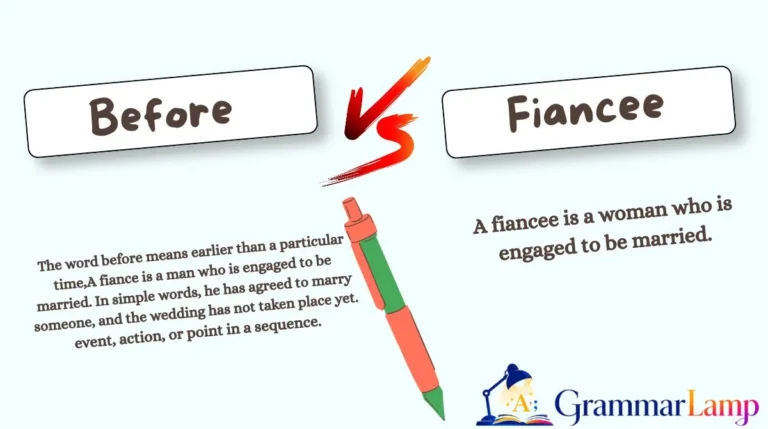
A fiance is a man who is engaged to be married. In simple words, he has agreed to marry someone, and the wedding has not taken place yet.
For example, if a woman says, “My fiance is coming to meet my parents,” she is talking about the man she plans to marry.
The word is borrowed from French. In traditional English spelling, the masculine form is fiance, while the feminine form is fiancee. You may also see the words written with accent marks in their French-derived forms: fiancé and fiancée.
When should you use “Fiance”?
Use fiance when you are referring to a man who is engaged to be married. It can appear in everyday conversation, personal writing, stories, and formal descriptions of a relationship.
You do not need to mention the wedding date to use this word. The important point is that the person is engaged and intends to marry.
For example, if your friend tells you that her boyfriend proposed to her and she accepted, she may now call him her fiance. The word describes his relationship status.
Grammar rule for “Fiance”
Fiance is a noun. It names a person who is engaged to be married.
It can be used as the subject or object of a sentence. It can also follow a possessive word such as my, your, his, her, or their.
Common sentence structures include:
- My fiance + verb
- His fiance + verb
- I met + my fiance.
- She introduced me to + her fiance.
Remember that fiance does not mean husband. A man becomes a husband when the marriage takes place, not simply when he becomes engaged.
Examples of “Fiance” in sentences
- My fiance is planning our wedding with me.
- Sarah’s fiance bought her a beautiful engagement ring.
- I met her fiance at a family dinner last weekend.
- His fiance works as a schoolteacher.
- My fiance and I are looking for a wedding venue.
- She introduced her fiance to all her friends.
- Daniel is excited to become a husband next year, but for now, he is still her fiance.
- My sister’s fiance will visit our family on Sunday.
Each example uses fiance to describe a man who is engaged to be married.
Common confusion about “Fiance”
One common mistake is thinking that fiance means boyfriend. These words can describe different stages of a relationship.
A boyfriend is a male romantic partner. He may or may not intend to marry his partner. A fiance is a man who is engaged to be married.
For example:
- “My boyfriend bought me flowers.” This does not tell us whether they plan to marry.
- “My fiance bought me flowers.” This tells us that he is engaged to be married.
Another point to remember is that engagement does not automatically mean a wedding will happen on a particular date. The couple may be planning the wedding, or they may not have chosen a date yet.
What Does “Fiancee” Mean?
A fiancee is a woman who is engaged to be married. In simple English, she is a woman who has accepted a marriage proposal or has otherwise become engaged to her future spouse.
For example, if a man says, “My fiancee is choosing her wedding dress,” he is talking about the woman he plans to marry.
The word has the same basic relationship meaning as fiance. The main traditional difference is the spelling used for the person’s gender.
When should you use “Fiancee”?
Use fiancee when you are referring to a woman who is engaged to be married.
You might use this word when talking about a wedding, introducing your partner, describing a relationship, or telling a story about your future marriage.
For example, a man might say, “I am taking my fiancee out for dinner tonight.” This means he is going out with the woman he is engaged to marry.
The word is not limited to formal writing. People use it in ordinary conversation, although some speakers prefer simpler expressions such as my partner or the woman I’m engaged to.
Grammar rule for “Fiancee”
Fiancee is also a noun. It names a person who is engaged to be married.
It follows the same basic sentence patterns as fiance. You can use it as the subject, object, or complement of a sentence.
Common structures include:
- My fiancee + verb
- Her fiancee + verb
- I met + his fiancee.
- They invited + my fiancee.
For example, “My fiancee lives in Lahore” is grammatically correct. The word fiancee is the subject, and lives is the verb.
Like fiance, this word describes an engaged person, not a married woman. After the wedding, the woman is traditionally described as a wife.
Examples of “Fiancee” in sentences
- My fiancee is helping me choose our wedding decorations.
- Ahmed introduced his fiancee to his colleagues.
- Her fiancee gave her a lovely engagement ring.
- I met your fiancee at the party last night.
- His fiancee is studying at a university.
- My fiancee and I hope to get married next spring.
- They invited his fiancee to the family celebration.
- Her fiancee will arrive at the airport this evening.
In all these sentences, fiancee refers to a woman who is engaged to be married.
Common confusion about “Fiancee”
Many learners understand that fiancee refers to a woman but forget which spelling has the extra letter e. This is understandable because both words look and sound very similar.
Another common confusion is believing that fiancee must be used only in formal English. That is not true. You can use it in a text message, an email, a conversation, or a wedding announcement.
However, some people prefer the gender-neutral word partner. Others may use future wife or the woman I’m engaged to. These expressions can be useful when you want to avoid a gender-specific term or make your meaning easier for every reader to understand.
Difference Between Fiance and Fiancee (Detailed)
The main difference between fiance and fiancee is the traditional spelling used to indicate whether the engaged person is a man or a woman. Both words refer to someone who plans to marry their partner.
The words are nouns, and they have the same basic grammar rules. You do not need a different sentence structure for each one.
Comparison table
| Feature | Fiance | Fiancee |
|---|---|---|
| Traditional meaning | A man engaged to be married | A woman engaged to be married |
| Part of speech | Noun | Noun |
| Relationship status | Engaged | Engaged |
| Basic meaning | Future husband | Future wife |
| Grammar | Can be subject or object | Can be subject or object |
| Example | My fiance is a doctor. | My fiancee is a doctor. |
| Plural form | Fiances | Fiancees |
| Pronunciation | Usually the same as fiancee | Usually the same as fiance |
The table shows that the words differ mainly in spelling and traditional gender reference. Their grammar and general relationship meaning are the same.
1. Usage difference
The traditional rule is straightforward:
- Use fiance for a man who is engaged to be married.
- Use fiancee for a woman who is engaged to be married.
Consider these two sentences:
Example 1: Maria introduced her fiance to her family.
This means Maria introduced the man she plans to marry.
Example 2: Ahmed introduced his fiancee to his family.
This means Ahmed introduced the woman he plans to marry.
Notice that the possessive words her and his also provide useful clues about the people being discussed. However, the spelling rule is still worth learning because it helps readers understand the relationship without needing extra information.
2. Grammar logic
Both words are countable nouns. This means you can use them with articles and numbers when the sentence requires them.
For example:
- She has a fiance.
- He has a fiancee.
- They met two fiances at the engagement party.
The last example uses fiances, the plural form of fiance. The plural of fiancee is fiancees.
You can also use possessive forms:
- My fiance’s car is outside.
- My fiancee’s family lives nearby.
In these examples, the apostrophe and s show possession. The first sentence refers to the car belonging to the engaged man, while the second refers to the family of the engaged woman.
The spelling difference does not change the usual rules for articles, verbs, or possessives.
3. Sentence structure difference
There is no special grammatical structure for one word that does not apply to the other.
Both words can be used as subjects:
- My fiance works in a bank.
- My fiancee works in a hospital.
Both can be used as objects:
- I called my fiance.
- I called my fiancee.
Both can follow a linking verb:
- He is my fiance.
- She is my fiancee.
The only difference in these examples is the traditional gender reference. The surrounding sentence structure remains the same.
4. Meaning comparison
Both terms describe a serious relationship in which two people are engaged to marry. Neither word tells you exactly when the wedding will happen.
A fiance may be getting married next month, next year, or at a later date. The same is true of a fiancee.
The words also do not tell you whether the couple lives together, how long they have been together, or how they became engaged.
For example, “My fiancee lives abroad” tells us that the speaker’s engaged partner is a woman and lives in another country. It does not tell us when the couple will marry.
Similarly, “My fiance works from home” describes the engaged man and his work arrangement. The relationship meaning stays the same.
5. What about gender-neutral language?
In traditional English usage, fiance and fiancee distinguish between a male and a female engaged partner. However, English usage can vary, and some writers use fiance as a general term regardless of gender.
If you want to avoid confusion, you can choose a more neutral expression, such as:
- My partner
- The person I’m engaged to
- My future spouse
These alternatives can be especially useful when a person’s gender is unknown, irrelevant, or not something you wish to specify.
The key is to choose the wording that best fits the person and the situation. In a grammar lesson focused on the traditional spelling distinction, learning both forms remains useful.
Explore More Posts
To Discuss or Discuss About: Which Is Correct? | Easy Grammar Guide 2026
Upmost vs Utmost: Meaning, Difference, and Correct Usage in 2026
Seam vs Seem: Difference, Meaning, Examples & Grammar Rules (2026)
All the Time vs Every Time: Meaning, Difference, Rules & Examples (2026)
Grammar Rules You Must Remember
Learning a few simple rules can help you use these words correctly without having to think too hard every time you write a sentence.
Rule 1: Use “Fiance” for a man in traditional English usage
When you are referring to a man who is engaged to be married, the traditional spelling is fiance.
Correct: Her fiance is coming to dinner.
Incorrect for the traditional distinction: Her fiancee is coming to dinner.
The correct choice here is fiance because the sentence refers to a man. Remember that some writers use the spelling more broadly, but the traditional distinction is the main rule taught to English learners.
Rule 2: Use “Fiancee” for a woman in traditional English usage
When the engaged person is a woman, use fiancee.
Correct: His fiancee is planning the wedding.
Incorrect for the traditional distinction: His fiance is planning the wedding.
The traditional spelling makes it easier for readers to identify the person being described. If you are unsure, remember that the feminine form has an extra e at the end.
Rule 3: Both words are nouns
A noun names a person, place, thing, or idea. These two words name a person who is engaged to be married.
You can use either word as the subject or object of a sentence.
Examples:
- My fiancee drives to work every day.
- I invited my fiance to the party.
- Her fiance is a kind person.
- His fiancee speaks three languages.
You do not need to change the verb rules because of the spelling difference. The verb agrees with the noun in the usual way.
Rule 4: Do not confuse an engaged partner with a married partner
A fiance or fiancee is engaged to be married. A husband or wife is married.
Before marriage: My fiancee is choosing a wedding dress.
After marriage: My wife is choosing a dress for the party.
This distinction is important when telling stories or describing a relationship. If the wedding has already taken place, husband or wife is usually the more accurate word in traditional usage.
Common Mistakes Students Make
English learners often make mistakes with these words because the difference is only one letter. Since the pronunciation is usually the same, listening alone may not help you choose the correct spelling.
Here are some common problems and easy ways to fix them.
Mistake 1: Using “Fiancee” for a man
Incorrect for the traditional distinction: My fiancee works in an office. (The intended person is a man.)
Correct: My fiance works in an office.
Why does this happen? Learners sometimes remember that the longer word is used for an engaged partner but forget which gender it traditionally refers to.
Correction tip: If the person is a man, use fiance in traditional English spelling.
Mistake 2: Using “Fiance” for a woman
Incorrect for the traditional distinction: My fiance will arrive at six. (The intended person is a woman.)
Correct: My fiancee will arrive at six.
The mistake is easy to make because both words sound alike. A reader may still understand the sentence from its context, but the traditional spelling would be different.
Correction tip: When the engaged person is a woman, remember the extra e at the end.
Mistake 3: Thinking the words have different pronunciations
Many learners assume that the extra letter changes the way the word is spoken. In ordinary English pronunciation, however, the two spellings are usually pronounced alike.
Example:
- My fiance is here.
- My fiancee is here.
When spoken aloud, the sentences may sound identical. The difference is mainly visible in writing.
Correction tip: Learn the spelling rule separately from the pronunciation. Do not rely only on what you hear.
Mistake 4: Using these words for someone who is already married
Incorrect: My fiance is my husband. (If the person is already married and the speaker means their current relationship status.)
Better: My husband is very supportive.
A person may have been a fiance before the wedding, but the relationship label usually changes after marriage.
Correction tip: Ask yourself whether the wedding has already taken place. If it has, husband or wife may be the correct term.
Mistake 5: Adding unnecessary words
Awkward: My male fiance is coming to visit.
More natural: My fiance is coming to visit.
In traditional usage, fiance already refers to a man. The extra word male is normally unnecessary unless you need to make a special contrast.
Correction tip: Keep sentences simple. Use the noun correctly instead of adding extra words to explain its meaning.
Mistake 6: Forgetting the plural spelling
The plural forms follow the usual English rule of adding s:
- One fiance → two fiances
- One fiancee → two fiancees
Example: Both fiances attended the family gathering.
Example: The two fiancees met at the wedding rehearsal.
These forms are less common in everyday conversation, but they are useful to know for reading and writing.
Easy Trick to Remember the Difference
Here is a simple way to remember the traditional spelling distinction.
Fiance = man. Fiancee = woman.
The feminine spelling has one extra e at the end. You can use that extra letter as a small memory clue.
Think of it this way: the word fiancee ends with two letters e in the sequence ee. Associate that longer ending with the traditional feminine form.
This is only a memory trick, not a general grammar rule. English spelling has many exceptions, so do not assume that an extra e always indicates a woman in other words.
You can also connect the words to real life.
Imagine that your friend Ali is engaged to a woman named Sara. Ali can call Sara his fiancee. Sara can call Ali her fiance.
The same couple uses two different spellings because each person is describing the other.
Here is another quick method:
- Think about the person you are describing.
- If the person is a man, choose fiance in traditional usage.
- If the person is a woman, choose fiancee in traditional usage.
- If you do not want to specify gender, consider using partner or the person I’m engaged to.
Practise this rule with names of people you know from films, books, or everyday life. Making your own sentences will help the difference become easier to remember.
Daily Life Examples
These everyday examples show how the words can appear in natural English. The short conversations also show that the terms are useful when talking about family, wedding plans, work, and relationships.
Example 1: Talking about a wedding
A: Are you getting married soon?
B: Yes! My fiance and I are planning the wedding for December.
Here, the speaker uses fiance to refer to an engaged man.
Example 2: Introducing a partner
A: Who is the woman standing beside you?
B: She is my fiancee. We got engaged last month.
The word fiancee identifies the woman the speaker plans to marry.
Example 3: Meeting the family
A: Is your fiance coming to dinner tonight?
B: Yes, he will arrive around seven.
The first speaker uses fiance to ask about an engaged man.
Example 4: Talking about wedding clothes
A: Have you chosen your wedding dress?
B: Not yet. My fiancee and I are going shopping this weekend.
The speaker is talking about the woman they are engaged to marry.
Example 5: Sharing good news
A: I heard you got engaged. Congratulations!
B: Thank you! My fiance proposed during our holiday.
The word describes the man who proposed and is now engaged to the speaker.
Example 6: Talking about work
A: What does your fiancee do?
B: She works as a nurse at a local hospital.
The word is used to ask about the occupation of an engaged woman.
Example 7: Making weekend plans
A: Would you like to come to the cinema with us?
B: I’d love to, but my fiance is visiting me this weekend.
The speaker uses fiance for the man they are engaged to marry.
Example 8: Discussing a long-distance relationship
A: Does your fiancee live in the same city?
B: No, she lives in Karachi, but we speak every day.
The word identifies the speaker’s engaged female partner.
Example 9: Talking about a family celebration
A: Who did you bring to the party?
B: This is my fiance. We got engaged two weeks ago.
The speaker introduces the man they plan to marry.
Example 10: Planning a future together
A: Are you and your fiancee thinking about moving?
B: Yes, we hope to find a place together after the wedding.
The sentence uses fiancee to refer to an engaged woman.
These examples show that both words fit naturally into everyday English. Once you know the traditional spelling difference, you can use them in conversations without changing the basic sentence structure.
Practice Section
Test your understanding with these five sentences. Choose fiance or fiancee according to the traditional distinction.
Questions
1. My ______ is coming to meet my parents. The person is a man.
A. Fiance
B. Fiancee
2. Her ______ bought her a beautiful engagement ring. The person who bought it is a man.
A. Fiance
B. Fiancee
3. Ahmed introduced his ______ to his friends. The person he introduced is a woman.
A. Fiance
B. Fiancee
4. My ______ and I are planning our wedding. The speaker is talking about an engaged woman.
A. Fiance
B. Fiancee
5. She told me that her ______ works as an engineer. The person is a man.
A. Fiance
B. Fiancee
Answers and Explanations
1. A — Fiance. The sentence refers to a man who is engaged to be married.
2. A — Fiance. The person who bought the ring is a man, so the traditional spelling is fiance.
3. B — Fiancee. Ahmed is introducing the woman he plans to marry.
4. B — Fiancee. The sentence specifically says that the engaged partner is a woman.
5. A — Fiance. The word refers to a man who is engaged to be married.
If you answered all five correctly, you understand the main spelling rule. If you made a mistake, review the memory trick and try writing a few sentences of your own.
More Helpful posts
Afterward or Afterwards? Meaning, Difference, and Correct Usage in 2026
A MA or an MA Degree? The Correct Grammar Rule in 2026
A or an: Easy Rules, Examples, and Common Mistakes in 2026
From My End or From My Side? Which Is Correct in English? (2026 Guide)
FAQs
1. What is the difference between fiance and fiancee?
In traditional English usage, fiance refers to a man who is engaged to be married, while fiancee refers to a woman who is engaged to be married. Both words describe an engaged partner. The main difference is their spelling and traditional gender reference.
2. Is fiance used for a man or a woman?
Traditionally, fiance is used for a man who is engaged to be married. For example, “My fiance is coming to dinner” refers to the engaged man. Some people use the spelling more broadly, but the traditional distinction is useful for clear writing.
3. Is fiancee used for a man or a woman?
Traditionally, fiancee refers to a woman who is engaged to be married. For example, “His fiancee is a teacher” means that the woman he plans to marry works as a teacher. The extra e helps distinguish the feminine form in traditional English spelling.
4. Are fiance and fiancee pronounced the same way?
Yes, they are usually pronounced the same way in English. The difference is mainly in their written forms, not their sounds. This is why learners may find the distinction difficult when listening to a conversation rather than reading a sentence.
5. Can I use fiance or fiancee in a formal email?
Yes. Both words are suitable for formal and informal writing when they accurately describe the relationship. You can use them in an email, invitation, personal message, or announcement. If you prefer gender-neutral wording, partner or the person I’m engaged to may also work.
6. What is the plural of fiance and fiancee?
The plural of fiance is fiances, and the plural of fiancee is fiancees. Both forms follow the usual English rule of adding s. For example, “The two fiances attended the event” uses the masculine form in its traditional sense.
Conclusion
The difference between fiance and fiancee is small, but it is useful to understand when writing about relationships.
Both words describe someone who is engaged to be married. In traditional English usage, fiance refers to a man, while fiancee refers to a woman.
Remember that both words are nouns and follow the same basic grammar rules. You can use them as the subject or object of a sentence, and their plural forms are fiances and fiancees. They are also usually pronounced the same way, which explains why the spelling can be confusing.
The easiest memory trick is to remember that the traditional feminine form has an extra e at the end. When you are unsure which word to choose, first think about the person you are describing.
If you prefer not to specify gender, you can use expressions such as partner or the person I’m engaged to. These are useful alternatives in many situations.
Keep practising with short sentences and real conversations. With a little practice, choosing the correct spelling will become much easier.

Liam Derren is a language writer at GrammarLamp, creating simple, helpful content about grammar, words, and everyday English. He makes language learning clear, practical, and easy to understand.