
Many English learners get confused by in, into, on, and onto because these four small words can describe places, positions, and movement.
Sometimes two of them can even look correct in the same sentence. That makes choosing the right preposition difficult, especially when you are speaking quickly.
Look at these sentences:
- The keys are in the bag.
- She put the keys into the bag.
- The phone is on the table.
- He put the phone onto the table.
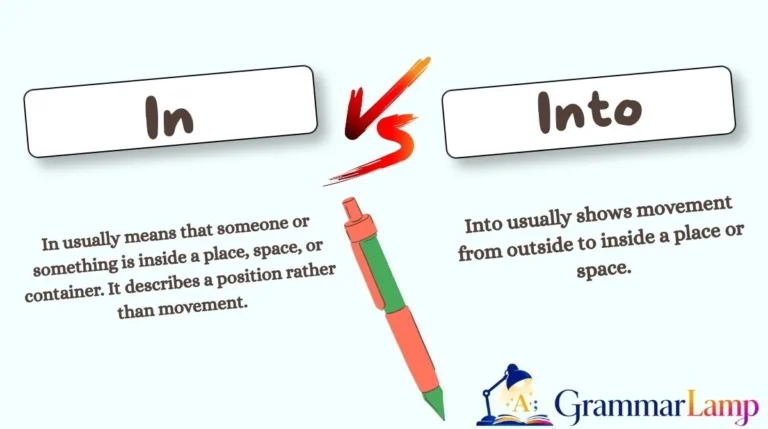
The difference may seem very small, but the meaning changes. In usually talks about being inside something, while into usually shows movement from outside to inside.
On usually describes a position on a surface, while onto usually shows movement to a surface. Cambridge Dictionary also explains this basic difference between position and direction.
These words are common in everyday English. You use them when talking about rooms, bags, cars, tables, streets, chairs, boxes, and many other places. Learning the basic idea behind them can make your English much more natural.
By the end, you will know when to use each preposition, how movement changes the choice, why some sentences allow more than one option, and how to avoid the mistakes learners often make.
More Useful posts
Feel vs Felt: Complete Grammar Guide With Examples (2026)
Role Call or Roll Call? The Correct Spelling and Meaning in 2026
Into or Onto: Complete Difference, Rules, and Examples for 2026
Sole vs Soul: What’s the Difference? Easy Guide With Examples 2026
What Does “In” Mean?
In usually means that someone or something is inside a place, space, or container. It describes a position rather than movement.
Think about a box. If a book is already inside the box, you can say:
The book is in the box.
There is no movement in this sentence. The book is simply located inside the box.
We also use in for larger areas such as rooms, buildings, cities, countries, parks, and other spaces. The British Council explains that in is commonly used for something inside a larger space.
When Do We Use “In”?
Use in when something is already inside a space or area.
The basic pattern is:
Subject + verb + in + place
For example:
- My wallet is in my bag.
- Sarah is in the kitchen.
- There are five books in the box.
- He lives in Lahore.
- The children are playing in the park.
- I left my phone in the car.
- There is some water in the bottle.
- She is waiting in the office.
Notice that all of these sentences describe a location. They answer the question “Where?”
In Does Not Always Mean a Small Physical Space
Learners sometimes think in only means “inside.” However, English also uses it with larger geographical areas.
We can say:
- in Pakistan
- in Asia
- in the city
- in the countryside
- in the mountains
- in the world
The idea is still connected to being within an area.
Common Confusion With “In”
A common mistake is using in when the sentence actually needs to show movement.
Compare:
She is in the room.
This means she is already there.
But:
She walked into the room.
This means she moved from outside to inside.
That small difference is extremely important. In = position. Into = movement toward the inside.
What Does “Into” Mean?
Into usually shows movement from outside to inside a place or space.
Imagine someone standing outside a room and then entering it.
Tom walked into the room.
Tom was outside first. Then he moved to the inside.
Cambridge describes into as the preposition used for movement toward the inside or toward a particular place.
When Do We Use “Into”?
Use into when an action causes someone or something to move inside.
The common pattern is:
Subject + movement verb + into + place
Examples:
- She walked into the house.
- The dog ran into the garden.
- He jumped into the pool.
- We went into the shop.
- The boy threw the ball into the box.
- She stepped into the elevator.
- The bird flew into the room.
- They carried the table into the kitchen.
The verbs in these examples show movement: walked, ran, jumped, went, threw, stepped, flew, carried.
Into Can Also Show Change
Into has another common use. We use it after verbs that describe a change from one form, state, or condition to another.
For example:
- The caterpillar changed into a butterfly.
- Water turns into ice.
- She changed into a clean shirt.
- They divided the cake into four pieces.
Cambridge also notes this use of into after verbs describing change.
Common Confusion With “Into”
Do not use into just because a place is mentioned.
Compare:
The children are in the classroom.
They are already there.
The children ran into the classroom.
They moved from outside to inside.
The first sentence describes location. The second describes movement.
What Does “On” Mean?
On usually describes a position on a surface or something physically attached to a surface.
Think of a table, wall, floor, shelf, or roof.
The cup is on the table.
The cup is already sitting on the table. There is no movement in the sentence.
The British Council explains that on is used for locations on surfaces, such as desks, walls, floors, and shelves.
When Do We Use “On”?
Use on when something is already positioned on a surface.
The basic pattern is:
Subject + verb + on + surface
Examples:
- The book is on the desk.
- Your keys are on the shelf.
- There is a picture on the wall.
- My shoes are on the floor.
- The cat is sleeping on the sofa.
- We live on the fifth floor.
- There is snow on the roof.
- The glass is on the table.
On Is Used in Other Common Places
English also uses on for certain transport, roads, streets, rivers, and islands.
For example:
- I am on the bus.
- She is on the train.
- They live on Main Street.
- London is on the River Thames.
- We stayed on an island.
These uses may not seem connected at first, so they are best learned as common English patterns.
Common Confusion With “On”
The biggest problem is confusing on with onto.
Compare:
The cat is on the roof.
The cat is already there.
The cat climbed onto the roof.
The cat moved to the roof.
So, just like in vs into, the main difference is often position vs movement.
What Does “Onto” Mean?
Onto usually shows movement to a position on a surface.
Imagine a person standing beside a platform. When they step onto it, they move from one place to another.
She stepped onto the platform.
Cambridge explains that onto is used for movement to a position on or toward a particular place or surface.
When Do We Use “Onto”?
Use onto when something moves and ends up on a surface.
The common pattern is:
Subject + movement verb + onto + surface
Examples:
- The cat jumped onto the bed.
- He climbed onto the roof.
- She stepped onto the stage.
- The child climbed onto the chair.
- The ball rolled onto the road.
- The leaves fell onto the ground.
- She put the bag onto the table.
- The players ran onto the field.
On or Onto?
In some sentences, on and onto can both be possible, especially after verbs such as put. The meaning may be almost the same, although onto can give a stronger feeling of movement.
For example:
Put the book on the table.
Put the book onto the table.
Both can be understood, but onto makes the movement toward the table more noticeable.
Onto and “On To” Are Not Always the Same
Be careful with onto and on to.
Onto is often a preposition showing movement to a surface:
The cat jumped onto the sofa.
But sometimes on and to belong to different parts of the sentence:
We moved on to the next lesson.
Here, on has the meaning of continuing, while to introduces the next lesson. Writing onto would change the structure.
This distinction becomes easier when you look at the meaning of the whole sentence instead of only the two words.
Difference Between In, Into, On, and Onto
The easiest way to understand all four words is to divide them into two groups.
In and on usually describe a position.
Into and onto usually describe movement toward a position.
| Word | Main idea | Position or movement? | Example |
|---|---|---|---|
| in | inside a space | Position | The keys are in the drawer. |
| into | moving to the inside | Movement | She put the keys into the drawer. |
| on | touching or resting on a surface | Position | The keys are on the desk. |
| onto | moving to a surface | Movement | She put the keys onto the desk. |
In vs Into
Use in when the person or thing is already inside.
The children are in the room.
Use into when the person or thing moves from outside to inside.
The children walked into the room.
A useful question is:
“Is there movement from outside to inside?”
If yes, into is often the right choice.
On vs Onto
Use on when something is already on a surface.
The phone is on the table.
Use onto when something moves to that surface.
He put the phone onto the table.
Again, ask whether the sentence describes a new movement.
Grammar Logic
The four words work around a simple idea:
in = inside
into = move inside
on = on a surface
onto = move to a surface
This is not a perfect rule for every expression in English, because some verbs allow more than one form. Still, it is a very useful starting point for learners.
For example, Cambridge notes that with some verbs such as put, fall, jump, and dive, both in and into may occur without a major change in meaning.
So you may hear:
Put the milk in the fridge.
and:
Put the milk into the fridge.
Both are natural.
Explore More Posts
Ardor vs Ardour: Meaning, Difference, Spelling & Examples (2026)
Fillet vs Filet: What’s the Difference? Meaning, Spelling, and Examples in 2026
Complaint vs Complain: Meaning, Difference, Grammar Rules & Examples (2026)
Differential vs Deferential: Meaning, Difference, Examples, and Grammar Rules (2026)
Grammar Rules You Must Remember
Rule 1: Use “in” for a location inside something
When the sentence tells us where a person or thing is already located, in is common.
The money is in my wallet.
There is no movement. The money is already inside the wallet.
Rule 2: Use “into” for movement from outside to inside
When someone or something moves inside, into is normally used.
The dog ran into the house.
The dog started outside and moved inside.
Rule 3: Use “on” for a position on a surface
When something is already resting on or attached to a surface, use on.
The laptop is on the desk.
The sentence describes its position, not the movement that put it there.
Rule 4: Use “onto” for movement to a surface
When something moves to a surface, onto is often the clearest choice.
The boy climbed onto the chair.
He was not already on the chair. The verb climbed shows movement.
Common Mistakes Students Make
These mistakes usually happen because learners focus on the noun after the preposition instead of asking what the verb is telling them.
Mistake 1: Using “in” for movement
❌ She walked in the room.
This can mean she walked while she was already inside the room, but it does not clearly mean that she entered it.
✅ She walked into the room.
Here, into clearly shows that she entered.
Mistake 2: Using “into” for a fixed position
❌ The phone is into my bag.
✅ The phone is in my bag.
There is no movement. The phone is already inside.
Mistake 3: Using “on” when movement is important
❌ The cat jumped on the table.
This sentence is common in everyday English and can be perfectly acceptable. However, onto makes the movement clearer.
✅ The cat jumped onto the table.
For learners who want to show movement clearly, onto is a useful choice.
Mistake 4: Using “onto” for every position on a surface
❌ The books are onto the desk.
✅ The books are on the desk.
The books are already there, so on is needed.
Easy Correction Tip
Before choosing the preposition, ask one simple question:
Is the thing already there, or is it moving there?
Already inside → in
Moving inside → into
Already on a surface → on
Moving to a surface → onto
That one question can solve many common mistakes.
Easy Trick to Remember the Difference
Think of two pictures in your mind.
First, imagine a box.
If your phone is already inside it:
The phone is in the box.
If you move the phone from outside to inside:
Put the phone into the box.
Now imagine a table.
If your phone is already resting on it:
The phone is on the table.
If you move the phone from another place to the table:
Put the phone onto the table.
So remember this little pattern:
IN = already inside
INTO = move inside
ON = already on
ONTO = move to the surface
The endings can help you too. Into contains the word in, and onto contains the word on. In both cases, the ending -to can help remind you of movement toward a new position.
This is not a rule for every possible use of these words, but it is a simple classroom trick that works very well for everyday place and movement sentences.
Daily Life Examples
Here are some natural examples that you may hear or use in daily conversation.
1. At Home
Ali: Where is my charger?
Sara: It’s in your bedroom.
The charger is already inside the bedroom.
2. Entering a Room
Dad: Where is Ahmed?
Mom: He just walked into the kitchen.
He moved from another place and entered the kitchen.
3. On the Table
A: Where did you put my glasses?
B: They’re on the table.
The glasses are already resting there.
4. Moving an Object
A: Where should I put these books?
B: Put them onto the shelf.
The books need to move to the shelf.
5. Getting Into a Car
A: Are you ready?
B: Yes. I’m getting into the car now.
The person is moving from outside to inside the car.
6. Already Inside the Car
A: Where are you?
B: I’m in the car.
The speaker is already inside.
7. Jumping Onto Something
A: What was that noise?
B: The cat jumped onto the sofa.
The cat moved to the sofa.
8. Sitting on Something
A: Where is your brother?
B: He’s sitting on the sofa.
He is already on the sofa.
9. Putting Food in a Container
A: Where should I put the rice?
B: Put it in the container.
Here, in is very natural with put because the destination is a container. Into is also possible when the speaker wants to emphasize the movement.
10. Walking Into a Store
A: Why did you stop?
B: I need to go into that store for a minute.
The person is talking about movement from outside to inside.
These examples show why the verb matters. Words like walk, run, jump, climb, step, go, and fly often make movement clear, so into or onto may fit naturally.
Practice Section
Choose the correct option.
1. The children are ___ the classroom.
A. into
B. in
2. She walked ___ the bedroom.
A. in
B. into
3. Your phone is ___ the desk.
A. on
B. onto
4. The dog jumped ___ the bed.
A. on
B. onto
5. He put the clothes ___ the bag.
A. in
B. into
Answers
- B — in
- B — into
- A — on
- B — onto
- A — in or B — into, depending on the speaker’s focus. Both can be natural with put.
More Helpful posts
Favourite vs Favorite: Meaning, Difference, Spelling & Usage Guide 2026
By Which vs In Which: Easy Difference, Rules, Examples & Practice (2026)
No Thank You vs No, Thank You: Which Is Correct in 2026?
Creek vs Creak: Meaning, Difference, Examples & Easy Rules (2026)
FAQs
What is the difference between in and into?
In normally describes a position inside a place, while into usually describes movement from outside to inside.
She is in the room.
She walked into the room.
The first describes location. The second describes movement.
What is the difference between on and onto?
On normally describes a position on a surface. Onto usually shows movement to that surface.
The book is on the table.
He put the book onto the table.
Cambridge notes that onto can give a stronger sense of movement than on.
Can “in” and “into” both be used after “put”?
Yes. With some verbs, especially put, both forms can be natural.
For example:
Put the milk in the fridge.
Put the milk into the fridge.
Into can put more focus on the movement, while in is very common in everyday speech.
Is “onto” formal or informal?
Onto is normal standard English, not a word that is limited to formal writing. It is common in both everyday speech and writing.
You can use it naturally in sentences such as:
The child climbed onto the chair.
What is the difference between “onto” and “on to”?
They can have different grammatical roles.
Onto is commonly used for movement to a surface:
The cat jumped onto the bed.
On to can occur when on and to have separate functions:
We moved on to the next question.
The meaning of the complete sentence helps you decide which form is correct.
Is “I am into music” the same as “I am in music”?
No. Into has another meaning when used with be.
“I’m into music” means “I’m interested in music” or “I like music.”
“I’m in music” normally suggests being involved in the music industry or field, depending on context. Cambridge lists be into as a common expression for enthusiasm or strong interest.
Conclusion
The difference between in, into, on, and onto becomes much easier when you focus on one main idea: position or movement.
Use in when someone or something is already inside a place. Use into when there is movement from outside to inside. Use on when something is already on a surface, and use onto when something moves to a surface.
Remember these four simple ideas:
In = inside
Into = movement inside
On = on a surface
Onto = movement to a surface
There are a few cases where English gives you more than one possible choice, especially with verbs such as put. That is normal. Do not worry if you see both forms in real conversations.
The best way to learn these prepositions is to notice them in everyday English and make your own sentences.
Practice with things around you: put a book on the table, walk into a room, keep your keys in a bag, or place your phone onto a desk. With regular practice, the correct choice will start to feel natural.

Liam Derren is a language writer at GrammarLamp, creating simple, helpful content about grammar, words, and everyday English. He makes language learning clear, practical, and easy to understand.
1 thought on “In vs Into vs On vs Onto: Easy Grammar Rules and Examples in 2026”