
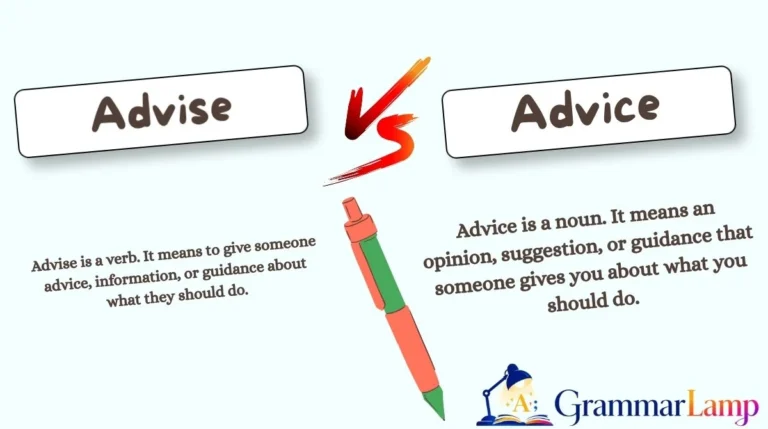
“Please advise” or “please advice” — which one is correct? This is a common question for English learners, especially when writing emails, messages, applications, and workplace communication.
The confusion is easy to understand because advise and advice look almost the same. They also sound similar, although their pronunciation is different. The main difference is simple: advise is a verb, while advice is a noun.
For example:
- Please advise me about the next step. ✅
- Please advice me about the next step. ❌
Here, advise means “to give information, guidance, or a suggestion.” It is an action, so we need a verb.
On the other hand:
- Thank you for your advice. ✅
- Thank you for your advise. ❌
In this sentence, advice means the guidance or suggestion itself. It is a noun.
A single spelling mistake can make an otherwise good message look less polished.
By the end of this guide, you will know exactly when to use please advise, when to use advice, why please advice is incorrect in standard English, and how to avoid confusing these two words in the future.
You will also see simple examples that you can use in real conversations and emails.
More Useful posts
In the Morning vs On the Morning: Complete Grammar Guide for 2026
Inside of vs Inside: The Easy Difference Explained in 2026
Attend vs Tend: Meaning, Differences, Grammar Rules & Examples (2026)
Better Understand vs Understand Better: Meaning, Grammar, and Correct Usage (2026)
What Does “Advise” Mean?
Advise is a verb. It means to give someone advice, information, or guidance about what they should do.
Think of advise as an action.
When you advise someone, you give that person a helpful suggestion or tell them what you think they should do.
Simple definition
Advise = to give advice or guidance
For example:
My teacher advised me to study every day.
The teacher performed an action: the teacher gave guidance. Therefore, advised is a verb.
When should you use “advise”?
Use advise when you are talking about the act of giving guidance or information.
It commonly appears in structures such as:
advise + person + to + verb
Examples:
The doctor advised him to get more rest.
My father advised me to save money.
You can also use:
advise + someone + about/on + something
Examples:
Can you advise me about this problem?
She advised us on the best way to proceed.
Another common structure is:
advise + that + sentence
For example:
The manager advised that we arrive early.
Examples of “advise”
- My teacher advised me to practice speaking English.
- The doctor advised her to drink more water.
- Can you advise me on what to do next?
- Please advise me if there are any changes.
- I advised him to check the email again.
- The company advised customers to keep their receipts.
- She advised us about the possible risks.
- Please advise us of your decision.
Notice that advise describes an action. Someone is giving guidance or information.
What does “please advise” mean?
Please advise is a polite expression that means:
Please give me the information or guidance I need.
It is especially common in emails and business communication.
For example:
Please advise on the next steps.
This means:
“Please tell me what I should do next.”
Another example:
Please advise if you need any additional documents.
This means:
“Please let me know if you need any additional documents.”
The word please does not change the part of speech of advise. The word after please is still a verb.
Compare:
Please help me.
Please call me.
Please advise me.
All three words — help, call, advise — are verbs.
A common learner confusion
Many learners write “please advice” because advice sounds like the word they have heard in sentences about suggestions.
But after please, when you are making a request, you normally need a verb:
Please advise me. ✅
Not:
Please advice me. ❌
The important point is not the word please itself. The important point is that advise is the verb needed to describe the action you are asking someone to perform.
What Does “Advice” Mean?
Advice is a noun. It means an opinion, suggestion, or guidance that someone gives you about what you should do.
Think of advice as the thing you receive or give.
Simple definition
Advice = a suggestion or guidance about what someone should do
For example:
My teacher gave me some good advice.
The teacher gave something: advice. Since advice is a thing or idea that is given, it is a noun.
When should you use “advice”?
Use advice when you are talking about guidance, suggestions, or recommendations as a noun.
Common structures include:
give + advice
My father gave me some advice.
get/receive + advice
I received some useful advice.
ask for + advice
I need to ask for your advice.
take + advice
You should take her advice.
follow + advice
He followed his doctor’s advice.
Examples of “advice”
- Thank you for your advice.
- I need some advice about my new job.
- She gave me useful advice.
- Can I ask for your advice?
- His advice helped me make a decision.
- You should follow your teacher’s advice.
- I appreciate your advice.
- My parents always give me good advice.
Here, advice is the guidance or suggestion itself.
Is “advice” countable?
This is another important grammar point.
In standard English, advice is normally an uncountable noun.
So we usually say:
some advice ✅
a piece of advice ✅
a little advice ✅
But not:
an advice ❌
And not:
two advices ❌
If you want to count individual suggestions, use pieces of advice.
For example:
She gave me three pieces of advice.
This means she gave me three separate suggestions.
A common learner confusion
Learners sometimes think advice is a verb because it looks similar to advise.
It is not.
Compare:
My teacher advised me to study harder.
My teacher gave me some advice.
The first sentence describes an action.
The second sentence describes the guidance that was given.
That difference is the key to understanding these two words.
Difference Between “Advise” and “Advice” — Detailed Explanation
The easiest way to understand the difference is to remember this:
Advise = verb
Advice = noun
They are related words, but they do different jobs in a sentence.
Comparison table
| Word | Part of speech | Meaning | Example |
|---|---|---|---|
| advise | Verb | To give guidance or information | Please advise me. |
| advice | Noun | Guidance or a suggestion | Thank you for your advice. |
| advised | Past-tense verb | Gave guidance | She advised me to wait. |
| advising | Present participle/gerund | Giving guidance | He is advising the team. |
Usage difference
Use advise when someone is doing something.
The lawyer advised me to wait.
The lawyer performed the action of giving guidance.
Use advice when you are talking about the guidance itself.
The lawyer gave me some advice.
The advice is the information or suggestion the lawyer gave.
Grammar logic
English sentences often need a verb to show an action.
For example:
Please call me.
Please help me.
Please tell me.
Please advise me.
In each sentence, the word after please is a verb.
That is why please advise is correct when you are asking someone to provide information or guidance.
Now compare:
Thank you for your advice.
Here, advice comes after your. The word your modifies a noun, so advice is the correct choice.
Sentence structure difference
Look at these patterns:
Please + verb
Please advise me.
Possessive + noun
Your advice was helpful.
Verb + noun
She gave me advice.
Verb + person + to + verb
She advised me to wait.
These patterns make the difference much easier to see.
Meaning comparison
Consider this pair:
My manager advised me to apply for the position.
This means the manager gave me guidance.
Now:
My manager gave me advice about the position.
This means the manager gave me guidance or suggestions.
The meaning is closely related, but the grammatical role is different.
Why “please advice” is wrong
The phrase please advice is incorrect in standard English when you mean “please give me information or guidance.”
The reason is simple:
advice is a noun, but the sentence needs a verb.
So:
Please advise me. ✅
Not:
Please advice me. ❌
A useful comparison is:
Please help me.
Please advise me.
You would never write:
Please helpful me.
The same basic idea applies to advice and advise. The noun cannot replace the verb.
More Helpful posts
Better Understand vs Understand Better: Meaning, Grammar, and Correct Usage (2026)
Hasn’t vs Haven’t: Easy Grammar Rules, Examples & Differences in 2026
Hear vs Here: Meaning, Difference, Grammar Rules & Examples in 2026
Smooth vs Smoothe: Which Spelling Is Correct? Complete Guide for 2026
Grammar Rules You Must Remember
Rule 1: “Advise” is a verb
Use advise when someone gives guidance or information.
The teacher advised me to practice more.
Here, advised tells us what the teacher did.
Another example:
Please advise me about the meeting.
The speaker is asking someone to provide information.
Rule 2: “Advice” is a noun
Use advice when you mean the guidance or suggestion itself.
Thank you for your advice.
The speaker is thanking someone for the guidance they received.
Another example:
I need some advice.
The speaker needs guidance.
Rule 3: “Advice” is usually uncountable
Do not normally say an advice or advices.
Use:
some advice
a piece of advice
two pieces of advice
For example:
She gave me a piece of advice.
Not:
She gave me an advice. ❌
Rule 4: “Advise” can be followed by a person
A very common structure is:
advise + person + to + verb
Examples:
My mother advised me to wait.
The doctor advised him to exercise.
The teacher advised us to read more.
You can also use:
advise + someone + about/on + something
For example:
Can you advise me on this matter?
This structure is especially useful in formal and professional English.
Common Mistakes Students Make
The confusion between advise and advice is common because the words are almost identical in spelling.
There is also a pronunciation difference, but many learners do not notice it when they first hear the words.
Mistake 1: Writing “Please advice”
Wrong:
Please advice me about the problem.
Correct:
Please advise me about the problem.
Why?
Because advise is the verb.
A simple correction tip is to replace the word mentally with tell.
Please tell me about the problem.
Since tell is a verb, you need the verb advise:
Please advise me about the problem.
Mistake 2: Writing “Thank you for your advise”
Wrong:
Thank you for your advise.
Correct:
Thank you for your advice.
Why?
The sentence is talking about the guidance that someone gave you. That guidance is a noun: advice.
You can think:
Thank you for your guidance.
Both guidance and advice are nouns.
Mistake 3: Saying “an advice”
Wrong:
Can you give me an advice?
Correct:
Can you give me some advice?
Or:
Can you give me a piece of advice?
Remember that advice is normally uncountable.
Mistake 4: Saying “two advices”
Wrong:
She gave me two advices.
Correct:
She gave me two pieces of advice.
This is a common mistake among learners whose first languages allow nouns like “advice” to be counted directly.
Mistake 5: Confusing “advise” with “advice” in email writing
You may see sentences such as:
Please advice as soon as possible. ❌
The correct version is:
Please advise as soon as possible. ✅
However, in many situations, please let me know sounds more natural and friendly:
Please let me know if you have any questions.
So please advise is grammatically correct, but your choice should also depend on the situation and tone.
Easy Trick to Remember the Difference
Here is a very simple memory trick:
Advise = action
Advice = information
When you advise someone, you do something.
When you give someone advice, you give them a thing — guidance or a suggestion.
You can also remember the spelling:
advise → verb → S sound at the end
advice → noun → C sound at the end
The pronunciation is different:
- advise ends with a sound like “z”
- advice ends with a sound like “s”
So if you hear the word, the pronunciation can sometimes help you identify it.
Another useful trick is to connect the words with familiar pairs:
practice / practise can be confusing in some varieties of English.
But with advise/advice, focus mainly on the grammatical job:
I advise you.
I give you advice.
That pair is worth memorizing.
If you remember only one sentence, remember:
I advise you, and I give you advice.
Once this sentence becomes natural, the difference becomes much easier.
Daily Life Examples
These examples show how advise and advice work in real conversations, emails, school situations, and workplaces.
1. Asking for information
A: I am not sure which form I need.
B: Please advise me about the correct form.
Here, advise is a verb because B is asking for guidance.
2. Asking a friend for guidance
A: Should I take this job?
B: I think you should ask your parents for advice.
Here, advice is a noun.
3. Talking to a doctor
The doctor advised me to get more sleep.
The doctor gave guidance, so advised is the verb.
4. Talking about what the doctor said
The doctor’s advice was very helpful.
The guidance itself is advice.
5. In a professional email
Please advise us of any changes to the schedule.
This is a formal way of asking someone to provide information.
A more conversational version would be:
Please let us know if the schedule changes.
6. Asking a teacher
Could you advise me on how to improve my writing?
This means:
Could you give me guidance about how to improve my writing?
7. Talking about a helpful suggestion
My brother gave me some good advice before my interview.
The suggestion is advice.
8. Giving a recommendation
I advised my friend to arrive early.
The speaker performed the action of giving guidance.
9. In a customer-service email
Please advise if you require any further information.
This means:
Please tell us if you need more information.
It is formal and common in business communication.
10. In everyday conversation
A: I have an exam tomorrow.
B: My advice is to get some rest tonight.
Here, advice is the noun.
You could also say:
I advise you to get some rest tonight.
Here, advise is the verb.
Both sentences have a similar meaning, but their grammar is different.
Practice Section
Choose the correct word: advise or advice.
1. Please ______ me about the next step.
2. Thank you for your helpful ______.
3. My teacher ______ me to read every day.
4. Can I ask for your ______?
5. Please ______ us if the meeting time changes.
Answers
1. advise
Please advise me about the next step.
2. advice
Thank you for your helpful advice.
3. advised
My teacher advised me to read every day.
4. advice
Can I ask for your advice?
5. advise
Please advise us if the meeting time changes.
Quick test
When you are unsure, ask yourself:
Am I talking about the action of giving guidance?
If yes, use advise.
Am I talking about the guidance itself?
If yes, use advice.
Explore More Posts
Alternative of vs Alternative for vs Alternative to: Which Is Correct? 2026 Guide
Realise or Realize: Which Spelling Is Correct in 2026?
Berth vs Birth: Meaning, Difference, Examples & Easy Rules for 2026
Insight vs Incite: What’s the Difference? Easy Guide for 2026
FAQs
1. What is the difference between “please advise” and “please advice”?
Please advise is correct when you are asking someone to give you information or guidance. Advise is a verb.
Please advice is incorrect in standard English because advice is a noun.
Example:
Please advise me about the problem. ✅
2. Can we use “advise” in questions?
Yes. Advise can be used naturally in questions.
For example:
Can you advise me on this issue?
Could you advise us about the next step?
These questions ask someone to give guidance or information.
3. Is “please advise” formal or informal?
Please advise is generally formal or business-like. You may see it in emails, workplace messages, customer service communication, and official documents.
In casual conversation, Can you let me know? or Can you tell me? may sound more natural.
4. Is “advice” a verb or a noun?
Advice is a noun. It means guidance, a suggestion, or an opinion about what someone should do.
For example:
She gave me some good advice.
The verb is advise:
She advised me to wait.
5. Can I say “an advice”?
Usually, no. Advice is an uncountable noun in standard English.
Say:
I need some advice.
Or:
I need a piece of advice.
Do not normally say:
I need an advice. ❌
6. What is the easiest way to remember “advise” and “advice”?
Remember this sentence:
I advise you, and I give you advice.
Advise is the action, so it is a verb.
Advice is the guidance itself, so it is a noun.
This simple pair can help you choose the correct word quickly.
Conclusion
The difference between advise and advice is small in spelling but important in grammar. The easiest rule is also the most useful one:
Advise is a verb. Advice is a noun.
Use advise when someone gives guidance or information:
Please advise me about the next step.
Use advice when you mean the guidance or suggestion itself:
Thank you for your advice.
Remember that advice is normally uncountable, so say some advice or a piece of advice, not an advice.
If you often write emails, applications, school assignments, or workplace messages, learning this difference will help your English sound much more accurate.
You do not need to memorize complicated grammar rules. Just remember the simple connection:
You advise someone. You give someone advice.
Practice these two words in your own sentences, and soon the difference will feel natural. The next time you wonder whether to write “please advise” or “please advice,” you will know the answer: please advise.

Liam Derren is a language writer at GrammarLamp, creating simple, helpful content about grammar, words, and everyday English. He makes language learning clear, practical, and easy to understand.