
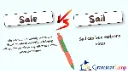
English has many words that sound exactly the same but have completely different meanings. Sale and sail are two common examples. They sound alike, but they are not used in the same way.
If you are learning English, you may see a sentence like “The store has a big sale” and another sentence like “We will sail across the lake.”
The words may sound similar when spoken, but their meanings, spellings, and uses are very different.
This can be confusing, especially for beginners and non-native English speakers. The good news is that the difference is easy to understand once you connect each word with its meaning.
This guide explains sale vs sail in simple English. You will learn what sale means, what sail means, how they work in sentences, and why learners sometimes use one word when they mean the other.
You will also see everyday examples, common mistakes, easy memory tricks, and practice questions.
By the end, you should be able to choose the correct word confidently when writing or speaking English.
More Useful posts
A MA or an MA Degree? The Correct Grammar Rule in 2026
A or an: Easy Rules, Examples, and Common Mistakes in 2026
From My End or From My Side? Which Is Correct in English? (2026 Guide)
Honor or Honour: What Is the Difference? A Simple Guide for 2026
What Does “Sale” Mean?
Sale is a noun. It usually refers to a situation where something is being offered for people to buy, often at a lower price than usual.
For example:
The shoes are on sale.
This means the shoes are available to buy at a special or reduced price.
The word sale is very common in shopping, business, advertising, and everyday conversations. You may see it on signs in stores, websites, newspapers, and advertisements.
When Do We Use “Sale”?
We use sale when talking about buying or selling something.
A sale can mean a period when a shop offers products at reduced prices:
The store is having a summer sale.
It can also refer to the act of selling something:
The sale of the house took three months.
In everyday English, however, learners often see sale in phrases connected with discounts.
Common expressions include:
- on sale
- for sale
- sale price
- special sale
- clearance sale
- weekend sale
- Christmas sale
- online sale
- house sale
- car sale
Grammar Rule for “Sale”
Sale is normally used as a noun.
It can be used with articles such as a, an, and the, depending on the sentence.
Examples:
There is a sale at the mall.
The sale starts tomorrow.
I found this jacket during a sale.
We can also use sale after certain prepositions.
These shoes are on sale.
The house is for sale.
Examples of “Sale”
- The store is having a big sale this weekend.
- I bought this shirt on sale.
- Is this computer for sale?
- The sale ends on Sunday.
- These shoes were on sale last week.
- The company announced a special sale for its customers.
- I found a great sale on winter clothes.
- The house is still for sale.
Notice that all of these sentences are connected with selling, buying, prices, or something being available for purchase.
“Sale” Does Not Mean “Selling Something on a Boat”
This is where the difference becomes important.
If you say:
We are going to sale across the ocean.
That sentence is incorrect.
The correct sentence is:
We are going to sail across the ocean.
Here, sail is the correct word because the sentence is about traveling on water.
So remember: sale is connected with buying and selling, while sail is connected with traveling on water.
What Does “Sail” Mean?
Sail can be a verb or a noun.
As a verb, it means to travel across water, usually in a boat or ship.
For example:
We sailed across the lake.
This means we traveled across the lake by boat.
As a noun, a sail is a large piece of strong material attached to a boat or ship. It catches the wind and helps move the boat.
For example:
The boat has a large white sail.
So, unlike sale, which is mainly connected with buying and selling, sail is connected with boats, ships, water, wind, and travel.
When Do We Use “Sail”?
We use sail when talking about traveling on water.
It can describe traveling on:
- a lake
- a river
- a sea
- an ocean
- other bodies of water
Examples:
They sailed across the Atlantic Ocean.
We sailed around the island.
The boat sailed down the river.
We can also use sail in a more general way to describe moving smoothly or easily.
For example:
The ball sailed over the fence.
The ball is obviously not traveling by boat. Here, sailed means it moved quickly and smoothly through the air.
Grammar Rule for “Sail”
When sail is used as a verb, it can take different forms:
- sail
- sails
- sailed
- sailing
Examples:
I sail every summer.
She sails with her family.
They sailed across the sea.
We are sailing toward the island.
When sail is used as a noun, it refers to the material on a boat that catches the wind.
The sail was damaged during the storm.
Examples of “Sail”
- We plan to sail across the lake tomorrow.
- They sailed around the island last summer.
- The ship sailed into the harbor.
- My brother loves to sail.
- The boat has a large white sail.
- We were sailing when the weather suddenly changed.
- The captain sailed the ship toward the island.
- The ball sailed over the goalkeeper’s head.
The meaning changes slightly depending on the sentence, but the main idea remains movement, especially by boat or ship.
Difference Between Sale and Sail
The biggest difference is simple:
Sale = buying or selling something
Sail = traveling on water or the material used to move a boat with wind
Although sale and sail have the same pronunciation in most standard varieties of English, they have different spellings, meanings, and grammatical uses.
Comparison Table
| Word | Part of Speech | Main Meaning | Common Use | Example |
|---|---|---|---|---|
| Sale | Noun | An event or act of selling | Shopping and business | The shoes are on sale. |
| Sail | Verb | To travel on water | Boats and ships | We will sail tomorrow. |
| Sail | Noun | Material that catches wind on a boat | Sailing | The sail is white. |
Usage Difference
Use sale when the subject involves money, products, shopping, or selling.
The store has a huge sale.
Use sail when the subject involves boats, ships, water, or movement.
We will sail across the sea.
Grammar Difference
Another important difference is their grammatical role.
Sale is mainly a noun:
The sale begins tomorrow.
Sail can be a noun:
The sail is broken.
But it is also commonly used as a verb:
We sail every summer.
This means you should not simply choose the word because it sounds right. Look at the meaning of the entire sentence.
Sentence Structure Difference
With sale, you may see structures such as:
subject + be + on sale
These shirts are on sale.
subject + have + a sale
The store is having a sale.
something + be + for sale
The car is for sale.
With sail, you may see:
subject + sail + place
We sailed across the lake.
subject + be + sailing
They are sailing toward the island.
Meaning Comparison
Compare these two sentences:
The boat is on sale.
The boat is sailing.
The first sentence means someone is offering the boat for someone to buy.
The second sentence means the boat is moving on water.
The same general subject, boat, can appear with both words, but the meanings are completely different.
Explore More Posts
Sun vs Son: Meaning, Difference, Rules, and Examples (2026)
A Majority of vs The Majority of: Easy Grammar Guide for 2026
Tomatoes or Tomatos: Which Spelling Is Correct? [2026]
In the Morning vs On the Morning: Complete Grammar Guide for 2026
Grammar Rules You Must Remember
Rule 1: Use “sale” for buying and selling
When you are talking about products, prices, shopping, or selling something, use sale.
The store is having a sale.
This laptop is on sale.
Do not use sail in these situations.
Incorrect:
The laptop is on sail.
Correct:
The laptop is on sale.
Rule 2: Use “sail” for traveling on water
When someone travels by boat or ship, use sail.
We will sail across the ocean.
They sailed down the river.
The word describes movement across water.
Rule 3: “Sale” is normally a noun
You can use sale with expressions such as a sale, the sale, on sale, and for sale.
There is a sale today.
The dress is on sale.
Is this car for sale?
Remember that sale is not normally used as a verb.
Rule 4: “Sail” can be a noun or a verb
As a verb:
We sail every weekend.
As a noun:
The sail caught the wind.
This makes sail more flexible grammatically than sale.
Common Mistakes Students Make
Many learners confuse these words because they sound the same. This is a classic example of homophones.
Homophones are words that sound the same but have different meanings and spellings.
Because you cannot see spelling while listening to someone speak, you need to use the context to understand which word the speaker means.
Mistake 1: “On sail”
Incorrect:
These shoes are on sail.
Correct:
These shoes are on sale.
The shoes are being offered at a special price, so sale is correct.
Mistake 2: “For sail”
Incorrect:
Is this house for sail?
Correct:
Is this house for sale?
A house can be offered for purchase, so we use sale.
Mistake 3: “Sail at the store”
Incorrect:
The store has a big sail.
Correct:
The store has a big sale.
If the store is offering products at reduced prices, it has a sale.
Mistake 4: “Sale across the ocean”
Incorrect:
We will sale across the ocean.
Correct:
We will sail across the ocean.
Here, the sentence describes travel on water, so sail is correct.
Mistake 5: Confusing the noun “sail”
Sometimes learners know that sail means traveling on water, but forget that it can also be a noun.
For example:
The ship’s sail was damaged.
Here, sail is not an action. It is the piece of material attached to the boat.
Why Do These Mistakes Happen?
The main reason is pronunciation.
Sale and sail sound the same in standard English pronunciation. A learner may know the meaning but still choose the wrong spelling when writing.
The best solution is to connect each spelling with a strong mental image:
sale → shopping
sail → boat
Once these connections become automatic, the spelling becomes much easier.
Easy Trick to Remember the Difference
Here is a simple trick that works well for beginners.
Think “SALE = SHOP”
Both words are connected with buying.
When you see sale, imagine a shop with a big sign saying:
SALE – 50% OFF
That image can help you remember the meaning immediately.
Think “SAIL = SHIP”
When you see sail, imagine a boat moving across the sea with a large sail.
So you can remember:
SALE → SHOP
SAIL → SHIP
There is also a useful spelling clue.
Sale has the letter e, just like many words connected with a place where you buy things, but the strongest memory trick is simply to connect sale with shopping.
Sail has ai, and you can picture a boat sailing through the air-filled wind.
Do not worry if you sometimes forget the spelling. Even advanced English learners make mistakes with homophones. The important thing is to look at the meaning before choosing the word.
Daily Life Examples
These examples show how sale and sail appear in natural conversations.
Example 1: At a Clothing Store
Ali: Why are so many people in this store?
Ahmed: They are having a big sale today.
Ali: Really? I might buy a jacket.
Here, sale refers to special prices in a store.
Example 2: Buying a Car
Sara: Is this car for sale?
John: Yes. The owner wants to sell it this week.
Sara: Do you know the price?
Here, for sale means available to buy.
Example 3: Talking About a Trip
Tom: What are you doing this weekend?
Mike: I’m going to sail with my friends.
Tom: That sounds fun!
Here, sail means travel by boat.
Example 4: Talking About a Ship
Emma: Look at that ship!
Lucy: Its sail is huge.
Emma: Yes, it looks beautiful.
Here, sail is a noun. It is part of the boat.
Example 5: Online Shopping
A: Did you buy those headphones?
B: Yes. They were on sale.
A: How much did you pay?
B: Only $30.
The headphones were being sold at a reduced price.
Example 6: A Summer Trip
A: Have you ever sailed across a lake?
B: Yes, I did it last summer.
A: Was it difficult?
B: No, it was really relaxing.
Here, sailed is the past form of sail.
Example 7: A Store Advertisement
Customer: What does this sign say?
Worker: Everything is on sale today.
Customer: Great. I need some new clothes.
The word sale is connected with shopping.
Example 8: Talking About a Boat
David: Where is your family going?
James: We are sailing to a small island.
David: How long will it take?
James: About two hours.
The action is traveling by boat, so sailing is correct.
Example 9: A House Advertisement
A: Is that house still for sale?
B: Yes, I think the owner has not found a buyer yet.
Here, sale means the house is available for purchase.
Example 10: A Ball in the Air
A: What happened to the ball?
B: It sailed over the wall.
This use may surprise learners. Sailed does not always refer to a boat. It can also describe something moving smoothly or quickly through the air.
Practice: Choose the Correct Word
Choose sale or sail in each sentence.
1. These shoes are on _____.
A. sale
B. sail
2. We are going to _____ across the lake.
A. sale
B. sail
3. Is this house for _____?
A. sale
B. sail
4. The boat has a large white _____.
A. sale
B. sail
5. The store is having a summer _____.
A. sale
B. sail
Answers
- Sale — The shoes are being offered at a special price.
- Sail — The sentence is about traveling across a lake.
- Sale — The house is available to buy.
- Sail — A sail is part of a boat.
- Sale — A store can have a sale when products are offered for purchase, often at lower prices.
Try making your own sentences with both words. For example, write one sentence about shopping and another about traveling by boat. This simple exercise can make the difference easier to remember.
More Helpful posts
Collaborate vs Corroborate: Meaning, Difference, and Examples in 2026
Sleeve vs Sleave: Which Is Correct? Meaning, Difference, and Examples in 2026
Time off vs time-off: The Complete Grammar Guide for 2026
I’m vs I Am: Complete Difference, Rules, Examples & Usage Guide 2026
FAQs
What is the difference between sale and sail?
Sale is connected with buying and selling things, especially when products are offered at lower prices. Sail usually means to travel on water by boat or ship. Sail can also mean the large piece of material that catches wind on a boat.
Can “sail” be used as a verb?
Yes. Sail is commonly used as a verb when talking about traveling by boat or ship.
For example:
We sailed across the lake.
It can also describe something moving smoothly through the air:
The ball sailed over the fence.
Can “sail” be a noun?
Yes. As a noun, sail refers to a piece of strong material attached to a boat or ship. It catches the wind and helps move the boat.
For example:
The boat has a large sail.
Is “sale” a noun or a verb?
Sale is normally a noun.
It refers to an event or situation involving selling something. It is especially common when stores offer products at lower prices.
For example:
The store is having a sale.
The related verb is sell.
The store sells clothes.
Can I say “This product is on sail”?
No. The correct expression is “This product is on sale.”
On sale means something is being offered for purchase, often at a reduced price.
For example:
These shoes are on sale today.
Sail is connected with boats and movement on water, so it does not work in this expression.
Why do sale and sail sound the same?
Sale and sail are homophones in standard English. This means they have the same pronunciation but different spellings and meanings.
English has many homophones, such as right/write, sea/see, and buy/by/bye. Context helps listeners understand which word is meant.
Conclusion
The difference between sale and sail is simple once you connect each word with its main idea.
Sale is related to buying and selling. You see it in expressions such as on sale, for sale, and a big sale. It is mainly used as a noun.
Sail is related to boats, ships, water, and movement. It can be a verb, as in “We sail across the lake,” or a noun, as in “The boat has a large sail.”
The biggest challenge is that these two words sound the same. That is why spelling mistakes are common. When you are unsure, stop and think about the meaning.
Are you talking about shopping and selling? Choose sale.
Are you talking about a boat or traveling on water? Choose sail.
With a little practice, you will quickly recognize the difference. Try using both words in your own sentences, and pay attention to them when you read signs, advertisements, and everyday English.

Liam Derren is a language writer at GrammarLamp, creating simple, helpful content about grammar, words, and everyday English. He makes language learning clear, practical, and easy to understand.